
Commercial Truck Insurance Florida: 35+ Years of Local Trucking Expertise & Low-Cost Quotes
Finding reliable Commercial Truck Insurance Florida shouldn’t feel like fighting bumper-to-bumper traffic on the I-4 corridor during rush hour. Since 1990, I have worked hands-on as an independent insurance agent helping hardworking Florida owner-operators, new ventures, and established motor carriers protect their rigs and their livelihoods.
To help you keep your working capital on the road, we offer flexible Low Down & EZ Monthly payments tailored to your cash flow.
To submit a quote request 24 hours a day fill out this Quote Request Form
Low Cost Commercial Truck Insurance Florida
Securing Low Cost Commercial Truck Insurance Florida comes down to matching your exact hauling radius, commodity class, and Gross Vehicle Weight (GVW) with an underwriter that actually wants your specific class of business. Many captive agents only have one rate sheet; if their underwriter doesn’t like coastal Florida zip codes or your specific cargo, you get hit with an inflated premium. By comparing multiple quotes across specialized transportation markets—whether you run out of the Gulf Coast ports supported by our
Semi Truck Insurance Florida
Operating Class 8 tractor-trailers along I-95, I-75, I-10, and the Florida Turnpike involves massive liability exposures and high equipment replacement values.
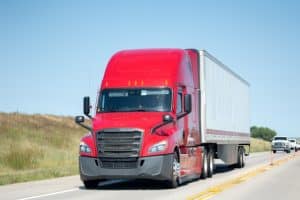
Owners Operators Insurance Florida
Whether you operate under your own active MC/USDOT authority or lease your tractor permanently onto an established motor carrier, our Owners Operators Insurance Florida packages are structured around your exact contract requirements. For independent owner-operators running under their own authority, we package primary liability, motor truck cargo, and physical damage with rapid state and federal filings. For leased-on owner-operators, we build specialized non-trucking liability, bobtail, and physical damage policies that satisfy your lease agreement without making you pay twice for coverage your motor carrier already provides.

Box Truck Insurance Florida
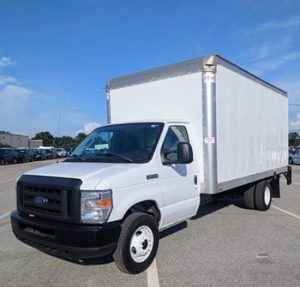
Final-mile delivery, moving companies, appliance installers, and wholesale food distributors rely on 16-foot to 26-foot straight trucks to keep Florida commerce moving. Our Box Truck Insurance Florida coverage protects Isuzu NPRs, Freightliner M2s, Hino straight trucks, and refrigerated cube vans against urban traffic collisions, loading dock accidents, and cargo theft.
Cargo Van Insurance Florida
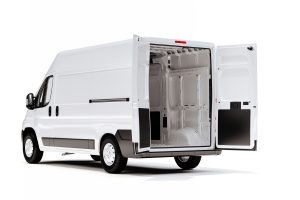
Expedited couriers, medical supply transporters, e-commerce delivery partners, and specialty tradesmen depend on nimble Sprinter vans, Ford Transits, and Ram ProMasters.
Auto Hauler Insurance Florida
Florida’s massive snowbird seasonal migrations, port imports, and major auto auctions in central and southern Florida keep car carriers running year-round. Our Auto Hauler Insurance Florida policies are engineered for single-vehicle rollbacks, 3-car and 4-car wedge trailers, and 9-car stinger-steered hydraulic rigs. Because you are responsible for multiple high-value vehicles simultaneously, we customize high-limit motor truck cargo policies so dealership transfers and auction hauls are protected during loading, transit, and unloading.

Hot Shot Insurance Florida
Running a Class 3, Class 4, or Class 5 dually pickup truck (such as a Ford F-350/F-450 or Ram 3500/4500/5500) paired with a 30-foot or 40-foot gooseneck flatbed trailer requires commercial trucking coverage—not a standard business pickup policy.
Dump Truck Insurance Florida
From coastal infrastructure upgrades and highway widening to residential developments, vocational dump trucks face rugged off-road and highway hazards every day. Our Dump Truck Insurance Florida programs cover tri-axle dump trucks, super dumps, transfer dumps, and aggregate bottom-dump trailers hauling sand, limerock, asphalt, and demolition debris. Whether you are working municipal site-prep jobs in Pinellas County backed by our
Comprehensive Commercial Truck Insurance Coverages We Offer
Every trucking operation faces different contractual and highway risks.
Primary Auto Liability:
The mandatory foundation of every commercial trucking policy. It pays for third-party bodily injury, medical bills, property damage, and legal defense costs if your commercial truck is at fault in an accident.
Motor Truck Cargo Insurance:
Protects the freight and commodities you are paid to haul against theft, collision, fire, overturn, and refrigeration breakdown.
Physical Damage Coverage:
Pays to repair or replace your own tractor and permanently owned trailer after a covered loss. It includes both Collision (rollovers, jackknifes, highway impacts) and Comprehensive coverage (theft, vandalism, fire, animal strikes, hail, and Florida windstorms or flooding).
Trailer Interchange Coverage:
Provides physical damage protection for non-owned trailers in your care, custody, and control while operating under a formal, written Trailer Interchange Agreement. If you pull intermodal shipping containers out of PortMiami, Port Everglades, Port Tampa Bay, or JAXPORT, you will also need specialized port endorsements—learn more on our
Non-Owned Trailer Physical Damage:
Covers physical damage to a trailer you do not own and are pulling without a formal written interchange agreement—common when pulling a customer’s or broker’s trailer on a standard drop-and-hook agreement.
Hired & Non-Owned Auto (HNOA):
Protects your trucking company from liability lawsuits involving vehicles you do not own.
Bobtail vs. Non-Trucking Liability (NTL) — Understanding the Difference:
Many truckers and even inexperienced agents confuse these two coverages, which can lead to denied claims:
-
Bobtail Insurance is triggered by equipment status: it covers liability whenever you are driving your tractor without a trailer attached (“bobtailing”), regardless of whether you are under dispatch heading to pick up a load or driving home after dropping a trailer.
-
Non-Trucking Liability (NTL) is triggered by operational intent: it covers your tractor (typically leased onto a motor carrier) strictly when you are off-dispatch and using the truck for personal, non-business activities, such as driving to the grocery store or heading home on your day off.
Personal Injury Protection (PIP) / Florida No-Fault:
Under Florida’s No-Fault insurance law, every commercial motor vehicle registered in the state must carry a minimum of $10,000 in PIP.
Medical Payments (MedPay):
Optional no-fault medical coverage that supplements PIP by helping pay out-of-pocket medical deductibles, co-payments, and immediate ambulance or emergency room expenses for you and your passengers after an accident.
Uninsured / Underinsured Motorist (UM/UIM):
Florida consistently ranks among the states with the highest percentage of uninsured drivers on the road. UM/UIM protects you and your drivers by paying for bodily injuries, lost wages, and long-term medical care if your rig is hit by an at-fault motorist who carries no liability insurance or limits too low to cover your injuries.

Florida Intrastate vs. Federal Interstate Trucking Insurance Requirements
Before we bind your policy, we verify whether your operation runs Intrastate or Interstate, as this determines which government agency regulates your minimum insurance limits:
-
Intrastate Trucking: Your truck picks up and delivers freight exclusively inside the borders of Florida, never crosses state lines, and the cargo itself is not part of a continuous out-of-state or international shipping movement (for example, hauling local sand from a Polk County quarry to a job site near our
Commercial Truck Insurance Lakeland -
Interstate Trucking: Your truck crosses state borders (even occasionally into Georgia), OR you haul freight solely within Florida that originated out-of-state or internationally (such as pulling an overseas container from a Florida seaport to a local warehouse or hauling Amazon/postal freight with an out-of-state bill of lading).
.
Florida Intrastate Commercial Truck Insurance Limits by GVW
For intrastate carriers operating solely within Florida, minimum Combined Single Limit (CSL) liability requirements are governed by the
| Gross Vehicle Weight Rating (GVWR) | Vehicle Examples | Minimum Florida Intrastate Liability | Mandatory Florida No-Fault | Required State Filing |
| Less than 26,000 lbs. | Cargo Vans, Sprinters, Light Work Trucks | $30,000 CSL (or $10k/$20k/$10k split limits) | $10,000 PIP | Standard Commercial Proof of Insurance |
| 26,000 lbs. to 34,999 lbs. | Medium-Duty Box Trucks & Straight Trucks | $50,000 CSL per occurrence | $10,000 PIP | Certificate of Liability / Form E (if applicable) |
| 35,000 lbs. to 43,999 lbs. | Heavy Straight Trucks & Vocational Dump Trucks | $100,000 CSL per occurrence | $10,000 PIP | Certificate of Liability / Form E (if applicable) |
| 44,000 lbs. or More | Semi-Trucks, Tractor-Trailers & Heavy Rigs | $300,000 CSL per occurrence | $10,000 PIP | Form E Intrastate Filing (when required) |
-
Broker & Contract Reality Check: While Florida law allows a $50,000 to $300,000 CSL minimum for intrastate trucks, the vast majority of commercial shippers, general contractors, and freight brokers require a minimum of $1,000,000 in Primary Auto Liability and $100,000 in Motor Truck Cargo before they will let you haul a load.
Federal (FMCSA) Interstate Commercial Truck Insurance Requirements
If you haul across state lines or carry interstate commerce, you must comply with the federal financial responsibility minimums enforced by the
| Interstate Operation & Commodity Type | Vehicle GVW Threshold | Federal Minimum Liability Limit (CSL) | Required FMCSA Federal Filings |
| For-Hire General Freight (Non-Hazardous) | Under 10,001 lbs. | $300,000 CSL | BMC-91 or BMC-91X & MCS-90 |
| For-Hire General Freight (Non-Hazardous) | 10,001 lbs. or More | $750,000 CSL (Brokers typically require $1,000,000) | BMC-91 or BMC-91X & MCS-90 |
| Household Goods Freight Forwarders / Movers | All Weights | $750,000 Liability + $5,000 / $10,000 Cargo | BMC-91X, MCS-90 & BMC-34 (Cargo) |
| Oil & Hazardous Waste / Materials (Moderate Risk) | 10,001 lbs. or More | $1,000,000 CSL | BMC-91 or BMC-91X & MCS-90 |
| High-Risk Hazardous Materials / Bulk Explosives / Poison Gas | 10,001 lbs. or More (or Bulk Tanks over 3,500 gal.) | $5,000,000 CSL | BMC-91 or BMC-91X & MCS-90 |
On Florida highways and weigh stations, both state and federal safety regulations are actively policed by the Florida Highway Patrol’s
ELD Mandates, Telematics, and How Data Sharing Unlocks Major Insurance Discounts
If you operate in interstate “for-hire” trucking (or haul commercial loads requiring Record of Duty Status logs), federal law requires your truck to be equipped with an ELD (Electronic Logging Device). An ELD is a federally mandated hardware device wired directly into your truck’s engine control module (ECM) that automatically records driving time, engine hours, vehicle movement, and miles driven to ensure strict compliance with FMCSA Hours of Service (HOS) rules.
Over the past few years, commercial trucking insurance companies have increasingly integrated Telematics into their underwriting and pricing models.
How to Get One of the Largest Discounts on Your Trucking Premium: Today, one of the single biggest premium discounts available in the Florida commercial truck insurance market—often saving 10 percent to 20 percent or more—comes from voluntarily allowing your insurance carrier to connect directly to your existing ELD device or smart camera system.
Why Are Insurance Companies Rewarding ELD Connections? Historically, insurance underwriters had to price your policy based on broad statistical averages: your Florida zip code, how many years you’ve held your authority, and your credit or past loss history. In a heavily litigated state like Florida, those averages penalize safe drivers. By connecting to your ELD, the insurance company gets verifiable, real-time proof that you maintain consistent speeds, brake smoothly, respect Hours of Service rest breaks, and park in safe locations. Because hard data proves you are a lower crash risk than the average fleet, underwriters reward that transparency with substantial upfront and renewal discounts.
Experts in New Authorities and New Ventures in Florida
Starting your own trucking company is an exciting milestone, but many standard insurance agencies flat-out refuse to quote startups or drivers with a newer CDL. At Colucci Insurance, we are the local Florida experts for New Authorities and New Ventures. We partner directly with specialized commercial underwriters who actively welcome first-year owner-operators and help you keep your startup overhead manageable.
To launch an interstate trucking company in Florida, your first step is registering your trucking LLC or corporation with the state through the official
Where to Register Your Commercial Truck in Florida (Intrastate, IRP & HVUT Form 2290)
Once we issue your Florida commercial truck insurance binder, your next step is registering your commercial motor vehicle and securing your license plates. Where you register depends on your weight and whether you cross state lines:
Intrastate Commercial Truck Registration (County Tax Collector Offices)
If your truck operates strictly within Florida (Intrastate), you can register your commercial vehicle and obtain standard Florida commercial plates at your local County Tax Collector’s office. Bring your vehicle title, valid identification, USDOT number (if applicable), proof of HVUT payment (for heavy rigs), and your active Florida commercial truck insurance COI. Here are four of the major metropolitan County Tax Collector offices in Florida:
-
Hillsborough County Tax Collector: 601 E Kennedy Blvd, Tampa, FL 33602
-
Miami-Dade County Tax Collector: 200 NW 2nd St, Miami, FL 33128
-
Duval County Tax Collector: 231 E Forsyth St, Jacksonville, FL 32202
-
Orange County Tax Collector: 200 South Orange Ave #1600, Orlando, FL 32801
If your business is based outside these four metro areas, you can find your nearest county motor vehicle service center using the official

Interstate Apportioned Registration (IRP) & IFTA
If you operate across state lines in two or more jurisdictions and your commercial vehicle (or combination) has a Gross Vehicle Weight exceeding 26,000 pounds, or has three or more axles regardless of weight, you must obtain Apportioned Plates through the International Registration Plan (IRP) as well as an IFTA fuel tax decal. The IRP is a reciprocal agreement among US states and Canadian provinces that calculates your registration fees proportionally based on the percentage of total mileage you run in each state. You can set up your Florida apportioned account through the
Heavy Vehicle Use Tax (HVUT / IRS Form 2290)
If you register a heavy highway motor vehicle with a taxable gross weight of 55,000 pounds or more, federal law requires you to file IRS Form 2290 and pay the annual Heavy Vehicle Use Tax (HVUT) before the state of Florida will issue or renew your tags. Check out our complete
Florida Commercial Driver's License (CDL) Requirements
Underwriter pricing is heavily tied to the driver’s CDL class, years of verifiable driving experience, and appropriate endorsements (such as Hazmat H, Tanker N, or Doubles/Triples T). Florida divides Commercial Driver’s Licenses into three distinct classes:
- Class A CDL: Required to operate any combination of vehicles (such as a tractor-trailer or heavy hot shot rig) with a Gross Combination Weight Rating (GCWR) of 26,001 pounds or more, provided the towed vehicle or trailer weighs more than 10,000 pounds.
- Class B CDL: Required to operate a single commercial vehicle (such as a heavy straight box truck, concrete mixer, or tri-axle dump truck) with a GVWR of 26,001 pounds or more, where any towed trailer weighs 10,000 pounds or less.
- Class C CDL: Required to operate a commercial vehicle that does not meet Class A or Class B weight thresholds (under 26,001 lbs.), but is either designed to transport 16 or more passengers (including the driver) or is hauling placarded quantities of Hazardous Materials.
For a complete breakdown of medical card rules, Entry-Level Driver Training (ELDT), CLP permit testing, and skills exam locations, read our comprehensive
Why CSA Scores and CAB Reports Dictate Your Florida Trucking Rates
Every time your commercial truck goes through a roadside inspection or weigh station, the results feed directly into two systems that commercial truck insurance underwriters check before quoting a single dollar:
-
FMCSA CSA Scores (Compliance, Safety, Accountability): Evaluates your safety performance across seven BASIC categories, including Unsafe Driving, Hours-of-Service Compliance, Vehicle Maintenance, and Crash Indicator.
-
CAB Reports (Central Analysis Bureau): A specialized insurance-industry intelligence report that synthesizes your FMCSA inspection history, out-of-service rates, chameleon-carrier flags, radius verification, and VIN histories into an underwriter risk profile.
Maintaining clean vehicle maintenance logs, passing Level I, II, and III roadside inspections, and resolving inaccurate violations through FMCSA’s DataQs system is one of the fastest ways to qualify for preferred-tier insurance companies. Learn how underwriters read your inspection data on our
Proven Tips for Lowering Your Commercial Truck Insurance Costs in Florida
You don’t have to sacrifice coverage quality to bring your annual premiums down.
- Let an Independent Agent Shop Multiple Markets: Never settle for a single renewal quote. Because carrier appetites in Florida shift constantly, having an independent specialist compare 10+ trucking underwriters ensures you always capture the lowest rate tier available for your operation.
- Tighten Your Stated Operating Radius: If 95 percent of your hauls stay within a 100-mile, 200-mile, or 300-mile radius in Florida, don’t pay for an “Unlimited / 48-State” radius classification. Rating your truck accurately for regional or local lanes significantly lowers your liability base rate.
- Optimize Your Physical Damage and Cargo Deductibles: Increasing your comprehensive and collision deductibles from $1,000 to $2,500 (or $5,000 on newer Class 8 tractors) lowers your fixed monthly installment while preserving catastrophic protection.
Florida DOT Truck Parking Availability System (TPAS) - Stay Engaged with Florida Business & Regulatory Advocacy: Successful motor carriers treat trucking like the serious business it is. You can keep up with state business licensing and corporate resources through the official
State of Florida government portal (MyFlorida.gov) Florida Office of Insurance Regulation & Department of Financial Services Florida Trucking Association Florida Chamber of Commerce
Commercial Truck Insurance Florida — Frequently Asked Questions (FAQs)
How much does commercial truck insurance cost in Florida?
In Florida, commercial truck insurance rates depend on your vehicle type, GVW, cargo class, operating radius, driving record, and years in business.
-
Semi-Trucks (Owner-Operators under own authority): Typically range from $11,500 to $17,500+ per year for $1,000,000 Primary Liability, $100,000 Cargo, and Physical Damage (New Ventures can range higher in year one).
-
Semi-Trucks (Leased onto a Motor Carrier): Typically $3,000 to $5,500 per year for Non-Trucking Liability/Bobtail and Physical Damage.
-
Box Trucks & Straight Trucks: Typically $5,000 to $10,500 per year depending on weight and radius.
-
Hot Shot Rigs (Dually + Gooseneck): Typically $6,500 to $12,000 per year.
-
Commercial Cargo Vans & Sprinters: Typically $2,800 to $5,500 per year.Because every trucking business is different, I compare multiple carriers side by side to give you an exact, customized quote rather than a one-size-fits-all estimate.
What are the FMCSA insurance requirements for Florida truckers?
If you haul general, non-hazardous freight across state lines (or haul interstate/import freight within Florida) in a vehicle with a GVWR of 10,001 pounds or more, the FMCSA requires a minimum of $750,000 in Public Liability insurance (though almost all freight brokers require $1,000,000). Vehicles under 10,001 pounds hauling interstate general freight require $300,000, while haulers of oil and hazardous materials require between $1,000,000 and $5,000,000 depending on the commodity.
Do you provide the MCS-90 endorsement and federal/state filings?
Yes! We electronically submit your federal BMC-91X liability filings, BMC-34 cargo filings (when required), intrastate Form E filings, and issue the MCS-90 endorsement directly with the FMCSA and state regulators so your authority activates and stays compliant without costly delays.
Do you offer low down payments and monthly payment plans?
Absolutely. Cash flow is the lifeblood of every trucking operation.
Can I get a quote if I'm a New Authority or have a brand-new CDL?
Yes, you can.
How fast can I get a Certificate of Insurance (COI) to book a load?
Once your policy is bound, we issue Certificates of Insurance rapidly—often within minutes during business hours—so you never miss out on a high-paying load from a broker or shipper waiting on certificate verification
Do I need UIIA insurance to pull containers out of Florida seaports?
If you haul intermodal ocean containers in and out of JAXPORT, PortMiami, Port Everglades, or Port Tampa Bay and participate in the Uniform Intermodal Interchange and Facilities Access Agreement (UIIA), you will need specific policy endorsements—including Auto Liability, Trailer Interchange, Hired Auto, and the CA 23-17 endorsement. We are UIIA specialists and transmit your certificates directly to the UIIA portal.

Get Your Free, No-Obligation Florida Commercial Truck Insurance Quote Today!
Don’t overpay for your trucking insurance or trust your livelihood to an out-of-state call center that doesn’t understand Florida’s highways, ports, or regulatory filings.
Call Daniel Colucci Directly Today at 656-223-7967 or submit our fast, 24/7 online Quote Request Form to see how much you can save on your Commercial Truck Insurance Florida policy!
Author Attribution & Credentials:This comprehensive Florida trucking insurance guide was written and reviewed by