
Commercial Truck Insurance Cape Coral FL: Low-Cost Quotes & 35+ Years of Local Expertise
Running a profitable trucking operation in Southwest Florida takes grit, smart dispatching, and tight control over your overhead. Whether you are hauling aggregate and construction materials across the Midpoint Memorial Bridge, delivering retail freight along the Pine Island Road (SR-78) and Del Prado Boulevard corridors, or pulling long-haul loads out of Lee County onto I-75, your insurance premium is one of your largest fixed expenses. When you are searching for Commercial Truck Insurance Cape Coral policies that protect your livelihood without draining your bank account, you need an agent who knows the trucking industry inside and out.
For over 35 years, I have served as the trusted local expert providing custom Truck Insurance Cape Coral solutions for single-truck owner-operators, new ventures, and growing commercial fleets. My name is Daniel Colucci (Florida Department of Financial Services License #A052134), and as an independent commercial trucking insurance specialist, I work for you—not a single corporate insurance company. We operate in full compliance with the
I know firsthand how important cash flow is to your trucking business. Between diesel fuel, maintenance, tires, and load board delays, tying up thousands of dollars in massive upfront insurance deposits can stall your operation before you even turn the key. That is why we specialize in providing Low Down and EZ Monthly payments structured specifically to maximize your working capital.
Contact Daniel Colucci Directly Today at 656-223-7967 or submit our fast, 24/7
Low Cost Commercial Truck Insurance Cape Coral FL
Every week, I speak with Cape Coral truckers who are frustrated by renewal rate hikes from captive agents who only sell one company’s policy. Being an independent agent, I will provide you with multiple quotes from competing insurance companies—and that is how you save the most money: by comparing different offers side by side.
While our primary focus on this page is helping Lee County motor carriers, our agency coordinates seamless coverage through our
You don’t just have to take my word for how much time and money we save local haulers. See what truckers are saying about us by visiting our verified

Semi Truck Insurance Cape Coral FL
Operating a Class 8 tractor-trailer out of Southwest Florida requires rock-solid financial protection and rapid certificate turnarounds. Our Semi truck insurance Cape Coral programs are built for regional and long-haul tractor-trailers running dry vans, refrigerated reefers, flatbeds, and intermodal containers up and down the I-75 corridor. Because a single highway accident involving an 80,000-pound rig can trigger seven-figure litigation, we match your tractor with compliant $750,000 to $1,000,000+ Primary Auto Liability, customized Motor Truck Cargo, and Physical Damage coverage with flexible deductible options.
Many of our Cape Coral semi-truck clients run freight north through the Suncoast and Tampa Bay logistics hubs. Whether your lanes take you through Manatee County near our
Owners Operators Insurance Cape Coral FL
Whether you operate independently under your own active USDOT authority or you are permanently leased onto an established motor carrier, our Owners Operators Insurance Cape Coral packages are tailored to eliminate coverage gaps and duplicate charges.
-
Independent Owner-Operators (Own Authority): We bundle your Primary Auto Liability, Physical Damage, Motor Truck Cargo, and General Liability under one cohesive plan—complete with instant electronic FMCSA filings and Low Down payment structures.
-
Leased-On Owner-Operators: When your motor carrier provides primary liability while you are under dispatch, you shouldn’t pay twice. We write affordable Non-Trucking Liability (NTL), Bobtail, and Physical Damage packages that satisfy your lease contract at the lowest possible monthly rate.
For a deeper look at how owner-operators are navigating underwriting changes this year, check out our comprehensive

Box Truck Insurance Cape Coral FL
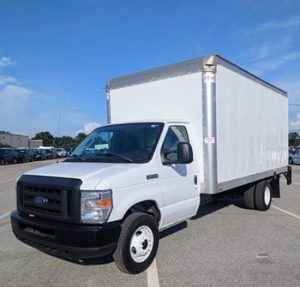
Cape Coral’s rapid residential and commercial growth has created massive demand for final-mile logistics, appliance and furniture delivery, moving companies, and wholesale distribution. Our Box Truck Insurance Cape Coral policies cover straight trucks, Isuzu NPRs, Hino cab-overs, and 26-foot box trucks (both under and over the 26,001-pound CDL threshold).
If you haul Amazon Relay loads, retail warehouse transfers, or local deliveries bridging the river into our
Cargo Van Insurance Cape Coral FL
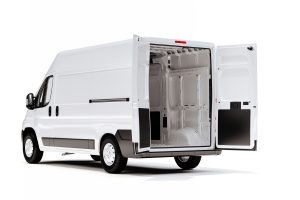
Standard personal auto policies strictly exclude commercial freight delivery, courier routes, and expedited logistics. Our Cargo Van Insurance Cape Coral plans protect Ford Transits, Mercedes-Benz Sprinters, RAM ProMasters, and Chevy Express vans used by expedited couriers, medical delivery services, and specialty trade fleets.
If you book loads through commercial freight brokers or regional dispatch boards connecting Southwest Florida with our
Auto Hauler Insurance Cape Coral FL
Southwest Florida sees heavy year-round car carrier traffic—from seasonal “snowbird” vehicle transport and dealership inventory transfers along US-41 to auto auction runs and commercial towing. Securing Auto hauler insurance Cape Coral coverage requires an agent who understands the high combined value of the vehicles sitting on your deck.
Whether you operate a single-car rollback, a 3-car or 4-car wedge trailer, or a 9-car stinger-steered hydraulic transporter, we customize your policy with high-limit Motor Truck Cargo and On-Hook Towing coverage.

Hot Shot Insurance Cape Coral FL
Running a Class 3, 4, or 5 dually pickup truck (such as a Ford F-350/F-450, RAM 3500/4500, or Chevy Silverado 3500HD) paired with a 30-to-40-foot gooseneck or dovetail flatbed trailer is one of the smartest ways to capture expedited machinery, building material, and agricultural loads in Lee County. Our Hot Shot Insurance Cape Coral plans are built specifically for both CDL and non-CDL hot shot haulers.
Many new hot shot drivers make the expensive mistake of buying a standard “business use” pickup policy, only to have their claim denied or their load rejected by a broker because they lack federal for-hire filings. We equip your hot shot rig with compliant $750,000 or $1,000,000 Primary Liability, $100,000+ Cargo insurance, and physical damage protection for both your dually truck and your gooseneck trailer—whether you are running local loads toward our
Dump Truck Insurance Cape Coral FL
With nonstop canal seawall repairs, new home subdivision grading in North Cape Coral, roadway expansions, and storm remediation across Lee County, local dirt, sand, shell, and asphalt haulers stay busy year-round. Our Dump Truck Insurance Cape Coral policies protect single-axle, tandem-axle, tri-axle, and super-dump trucks, as well as dump trailers.
Dump trucks face unique underwriting risks, including load shifts, tip-overs on uneven fill dirt, and flying gravel windshield claims. Whether you are hauling aggregate out of mines near our
Comprehensive Commercial Truck Insurance Coverages We Offer
Every trucking business faces different highway, cargo, and contractual risks. When I build your quote, I explain every coverage line in plain English so you never pay for fluff, and you never get blindsided at claim time:
Primary Auto Liability & MCS-90 Filings
The mandatory foundation of every commercial trucking policy.
Motor Truck Cargo Insurance
Protects the freight, commodities, vehicles, or equipment you are paid to haul against loss or damage from collision, fire, overturn, theft, and reefer breakdown.
Physical Damage Coverage
Pays to repair or replace your own tractor, box truck, dump truck, and permanently owned trailer after a covered loss. It combines Collision Coverage (rollovers, jackknifes, highway impacts) and Comprehensive Coverage (theft, vandalism, fire, animal strikes, glass breakage, and Florida windstorms or flooding).
Trailer Interchange & UIIA Intermodal Coverage
If you pull a trailer owned by another motor carrier, shipper, or steamship line under a formal written Trailer Interchange Agreement, Trailer Interchange Coverage provides physical damage protection for that non-owned trailer while it is in your care, custody, and control. If you haul intermodal ocean containers in and out of Florida ports or rail yards, visit our
Non-Owned Trailer Physical Damage
Unlike Trailer Interchange (which requires a formal written interchange contract), Non-Owned Trailer Physical Damage covers physical damage to a trailer you do not own that you are pulling on a casual, borrowed, or brokered “drop-and-hook” basis without a formal interchange agreement.
Commercial General Liability (CGL)
Covers third-party bodily injury and property damage claims arising from your business operations off the highway—such as a slip-and-fall at your office, damage caused on a shipper’s loading dock during pallet jack unloading, or erroneous delivery of freight. Most major shippers and freight brokers require a $1,000,000 General Liability certificate before allowing you on their property.
Hired & Non-Owned Auto (HNOA)
Protects your company against liability lawsuits arising from vehicles your business does not own.
Bobtail vs. Non-Trucking Liability (NTL): Understanding the Difference
One of the most misunderstood areas in trucking insurance is the difference between Bobtail and Non-Trucking Liability—and confusing the two can leave an owner-operator completely uninsured after a crash:
-
Bobtail Insurance is triggered by equipment: it provides liability coverage whenever you are driving your tractor without a trailer attached (bobtailing), regardless of whether you are under dispatch or returning from delivering a load.
-
Non-Trucking Liability (NTL) is triggered by intent: it provides liability coverage only when you are using your truck for strictly personal, non-business, non-revenue purposes while completely off-dispatch (such as driving your tractor to get groceries or to a doctor’s appointment on your day off).
Personal Injury Protection (PIP) / Florida No-Fault
Under Florida’s No-Fault insurance law, every commercial motor vehicle registered in the state must carry a minimum of $10,000 in Personal Injury Protection (PIP).
Medical Payments (MedPay)
An optional coverage that works alongside PIP to pay immediate out-of-pocket medical, ambulance, and hospital deductibles or co-pays for you and your passengers after an accident, regardless of fault.
Uninsured / Underinsured Motorist (UM/UIM)
Florida consistently ranks among the states with the highest percentage of uninsured and minimally insured drivers. UM/UIM coverage protects you and your CDL drivers by paying for severe bodily injuries, long-term medical rehabilitation, and lost income if your rig is hit by an at-fault passenger car or motorist who carries no bodily injury liability insurance—or carries state-minimum limits too low to cover your injuries.
Florida Intrastate Commercial Truck Insurance Limits & Regulations
If your trucks pick up and deliver freight strictly within the borders of Florida (and that freight did not originate outside the state as part of a continuous interstate shipment), you are governed by Florida intrastate rules overseen by the
| Truck GVW | FL Min. Liability | FL No-Fault |
| Under 26,000 lbs. | $30,000 CSL (or 10/20/10) | $10,000 PIP |
| 26,000 – 34,999 lbs. | $50,000 CSL | $10,000 PIP |
| 35,000 – 43,999 lbs. | $100,000 CSL | $10,000 PIP |
| 44,000+ lbs. | $300,000 CSL | $10,000 PIP |
(Broker Reality Check: Even when Florida law only requires $50,000 to $300,000 CSL for intrastate trucks, almost all commercial shippers, general contractors, and freight brokers require $1,000,000 CSL before loading your truck.)
Florida Weight Enforcement, Permits & Local Cape Coral Truck Parking
Operating legally on Lee County roads and the I-75 agricultural and weigh station corridors requires strict adherence to state highway safety rules. On-road inspections, logbook audits, and safety compliance checks are actively conducted by the Florida Highway Patrol’s
To avoid costly overweight citations at scale houses or portable scale checks in Lee County, review the official
When hauling heavy dump loads or machinery across Cape Coral’s canal network and the Caloosahatchee River bridges, always check local municipal road postings and bridge maintenance updates through the
Parking a commercial semi-truck or trailer in residential Cape Coral neighborhoods is strictly restricted by city code enforcement, and parking on unlit highway shoulders exposes your rig and cargo to both theft and severe rear-end liability claims. When planning your routes across the state, you can locate rest areas and real-time staging availability on the
Finally, we strongly recommend that Cape Coral fleet owners and independent owner-operators join the
Federal Interstate Commercial Truck Insurance Requirements (FMCSA)
What is the difference between intrastate and interstate trucking? Intrastate trucking means your vehicle, driver, and cargo start and end exclusively inside Florida without crossing state borders or moving goods as part of an out-of-state bill of lading. Interstate trucking occurs whenever your commercial truck crosses state lines—or even if you never leave Cape Coral, but you haul freight (such as port containers, air freight, or national distribution goods) that originated outside of Florida or is bound for another state.
Interstate carriers must comply with federal safety and insurance mandates regulated by the
| Freight / Commodity Type | GVW | Federal Min. Limit |
| Non-Hazardous Freight | Under 10,001 lbs. | $300,000 CSL |
| Non-Hazardous General Freight | 10,001+ lbs. | $750,000 CSL* |
| Oil & Low-Risk Hazmat / Waste | 10,001+ lbs. | $1,000,000 CSL |
| High-Risk Hazmat / Explosives | 10,001+ lbs. | $5,000,000 CSL |
| Household Goods (Cargo Filing) | All Weights | $5k/veh; $10k/occ |
*Note: While the FMCSA minimum for general non-hazardous freight over 10,001 lbs. is $750,000 CSL, nearly all freight brokers require $1,000,000 CSL.
ELD Mandates, Telematics & How Sharing ELD Data Unlocks the Largest Discounts
If you operate in interstate “for-hire” trucking (or haul regulated intrastate hours), federal rules require the use of an ELD (Electronic Logging Device). An ELD is a piece of hardware synchronized directly with your truck’s engine control module (ECM) that automatically records driving time, engine hours, vehicle movement, and miles driven to ensure strict compliance with Hours of Service (HOS) fatigue laws.
In today’s insurance market, commercial trucking insurance companies are increasingly using telematics in their underwriting and rating. Telematics combines GPS technology, onboard sensors, and engine diagnostics to measure real-world driving behavior—tracking metrics like speed relative to posted limits, hard braking, rapid acceleration, cornering stability, and time-of-day driving.
Here is an insider tip every Cape Coral trucker needs to know: Today, one of the single largest discounts on your commercial truck insurance premiums comes from allowing your insurance company to connect to your ELD device (often up to 10% to 20%+ off your base rate). Why are insurance companies doing this? Because historical crash data proves that carriers with consistent speed control and clean Hours of Service habits file far fewer catastrophic claims. By connecting to your ELD, underwriters can price your policy based on how safely you actually drive, rather than penalizing you solely for Florida’s high litigation rates or a newer authority age. In fact, many top-tier commercial truck insurance companies will no longer accept or quote your account at all if you do not agree to share your ELD device data with them.

Where to Register Your Commercial Truck in Cape Coral, FL
Once I bind your policy and issue your Florida proof of commercial insurance, you will need to register your truck and obtain your commercial license plate.
-
Local Intrastate Registration (Cape Coral): For commercial trucks operating solely inside Florida, visit the Lee County Tax Collector’s Office in Cape Coral, conveniently located at 1039 SE 9th Ave #102, Cape Coral, FL 33990. Because commercial title and GVW declarations can take extra time, you can check wait times, schedule an appointment, or view all regional branches on the
Lee County Tax Collector Locations page -
Apportioned Registration via the International Registration Plan (IRP): If you are hauling across state lines, you may need Apportioned Registration via the International Registration Plan (IRP) instead of a standard county tag. What is the IRP? It is a reciprocity agreement among the U.S. states and Canadian provinces that allows an interstate commercial motor carrier to register once in its base state (Florida) and pay registration fees proportionally based on the percentage of total distance operated in each jurisdiction. You will receive one “Apportioned” license plate and a Cab Card listing every state you are authorized to operate in. You are required to obtain an IRP apportioned tag if your vehicle travels across two or more member jurisdictions and either (1) has two axles and a Gross Vehicle Weight exceeding 26,000 pounds, (2) has three or more axles regardless of weight, or (3) is used in combination when the combined weight exceeds 26,000 pounds. You can set up your IRP account through the
Florida International Registration Plan (IRP) portal -
Heavy Vehicle Use Tax (HVUT / IRS Form 2290): If you are registering a heavy commercial truck with a taxable gross weight of 55,000 pounds or more, federal law requires you to pay the annual Heavy Vehicle Use Tax (HVUT) and present a stamped IRS Schedule 1 (Form 2290) before the tax collector or IRP bureau will issue your tag.
Visit our Heavy Vehicle Use Tax (HVUT) & IRS Form 2290 Guide

Local Experts for New Authorities & New Ventures in Cape Coral
Many insurance brokers turn their backs on startup trucking companies, leaving new owners stuck with sky-high assigned-risk quotes. At Colucci Insurance, we are the local experts for New Authorities and New Ventures. We partner with specialized carriers that welcome startup motor carriers and new CDL drivers, helping you activate your authority fast without destroying your startup budget.
If you are launching a new trucking business in Cape Coral, here is your essential startup checklist:
- Register Your Business Entity in Florida: Before applying for trucking authority, establish your LLC or corporation with the State of Florida. You can find step-by-step instructions and file online on the official
Florida Sunbiz Start a Business website - Apply for Your USDOT & MC Numbers: All new authorities must obtain a USDOT number (and a Motor Carrier “MC” docket number if hauling regulated commodities for-hire across state lines). Complete your unified registration directly through the
FMCSA DOT Registration portal - Secure Your Local Cape Coral Business License: You may also have to apply for a local business license (known in Florida as a Local Business Tax Receipt) for your trucking company and pay local municipal taxes based on your garaging or home-office address. Review application steps on the
City of Cape Coral Business Tax Receipts Division page or you can apply in person at 1015 Cultural Park Blvd Cape Coral FL 33990. - Network to Grow Your Local Freight Connections: After you have created your business and insured your truck, consider growing your company and meeting local shippers, builders, and distributors through networking opportunities at the Chamber of Commerce of Cape Coral, located at 2051 Cape Coral Pkwy E, Cape Coral, FL 33904. You can find membership information on the
Cape Coral Chamber of Commerce website
Florida Commercial Driver's License (CDL) Classes Explained
Your drivers’ licensing credentials and years of verifiable CDL experience directly impact your commercial truck insurance rates.
-
Class A CDL: Required to operate any combination of vehicles with a Gross Combination Weight Rating (GCWR) of 26,001 pounds or more, provided the towed vehicle (trailer) weighs more than 10,000 pounds (such as semi-trucks, tractor-trailers, and heavy CDL hot shot setups).
-
Class B CDL: Required to operate a single commercial vehicle with a GVWR of 26,001 pounds or more, or any such vehicle towing a trailer that weighs 10,000 pounds or less (such as heavy straight box trucks, multi-axle dump trucks, and concrete mixers).
-
Class C CDL: Required to operate a commercial vehicle that does not meet Class A or Class B weight thresholds (under 26,001 lbs. GVWR), but is either designed to transport 16 or more passengers (including the driver) or is used to haul placarded hazardous materials.
For detailed information on testing, Entry-Level Driver Training (ELDT), medical cards, and eligibility requirements, visit our complete
CSA Scores & CAB Reports: Why Your Safety Record Controls Your Rates
When commercial trucking underwriters price a quote for your Cape Coral fleet, they don’t just pull motor vehicle records (MVRs)—they immediately inspect your federal CSA (Compliance, Safety, Accountability) Scores and your CAB (Central Analysis Bureau) Report.
Because freight brokers and underwriters check your public safety profile daily on the
Your CSA scores track seven BASIC safety categories, including Unsafe Driving, Hours-of-Service Compliance, Vehicle Maintenance, and Crash Indicator. Your CAB report goes even deeper, compiling every roadside inspection, out-of-service violation, chameleon-carrier flag, and radius indicator tied to your USDOT number. Maintaining a clean inspection record and favorable CAB report is a major factor in qualifying for preferred-tier insurance rates.
Smart Tips for Lowering Your Commercial Truck Insurance Costs in Cape Coral
Looking for practical ways to bring your premium down without sacrificing protection? Here are the most effective strategies I use to help Cape Coral truckers slash their insurance costs, along with a link to our detailed blog post on
- Let an Independent Agent Shop Multiple Carriers: Never settle for a single renewal quote.
Because different insurers have different appetites for dump trucks, box trucks, hot shots, and semis, letting me compare multiple markets side by side is the #1 way to save. - Choose Smart Physical Damage Deductibles: Raising your collision and comprehensive deductibles from $1,000 to $2,500 (or $5,000 on higher-value tractors) immediately reduces your annual premium while keeping you protected against catastrophic losses.
Frequently Asked Questions (FAQs): Commercial Truck Insurance Cape Coral FL
How much does commercial truck insurance cost in Cape Coral, FL?
Commercial truck insurance costs in Cape Coral vary based on your truck type, GVW, cargo hauled, operating radius, CDL experience, and USDOT safety history.
-
Commercial Cargo Vans & Sprinters: $2,500 – $5,500 per year
-
Box Trucks & Straight Trucks: $5,000 – $9,500 per year
-
Hot Shot Rigs (Dually + Gooseneck): $6,500 – $12,000 per year
-
Dump Trucks (Intrastate Lee County/SWFL): $6,000 – $11,500 per year
-
Semi-Trucks / Tractor-Trailers (Established Authority): $12,000 – $18,000+ per year
-
New Authorities / Startup Ventures: $16,000 – $25,000+ per year
Because every operation is unique, call me at 656-223-7967 so I can compare multiple carriers side-by-side for your exact VINs and drivers.
What are the FMCSA insurance requirements?
For interstate “for-hire” motor carriers, the FMCSA requires a minimum of $300,000 in Public Liability for vehicles under 10,001 lbs. GVW hauling non-hazardous freight, and $750,000 in Public Liability for vehicles 10,001 lbs. GVW or heavier hauling non-hazardous general freight (though almost all freight brokers require $1,000,000 to book a load).
Do you provide the MCS-90 endorsement and federal filings?
Yes! Whenever you haul regulated commodities interstate under your own authority, we provide the federal MCS-90 endorsement attached to your Primary Auto Liability policy and electronically file your BMC-91X (Liability) and BMC-34 (Household Goods Cargo, if applicable) directly with the FMCSA so your authority activates without delay.
Do you offer monthly payments?
Absolutely. I know firsthand how critical cash flow is to running a profitable trucking company. We specialize in Low Down and EZ Monthly payment plans across our carriers so you can keep your cash in your business, while also offering 10% to 15% Paid-in-Full discounts if you prefer a single annual payment.
Can I get a quote if I'm a New Authority with a new CDL?
Yes, you can! While many captive insurance companies reject startup ventures or drivers with less than two years of CDL experience, we represent specialized commercial trucking programs that actively write New Authorities and new CDL holders in Cape Coral at competitive rates.
Where can I find low cost commercial truck insurance costs in Cape Coral?
The smartest way to find the lowest commercial truck insurance costs in Cape Coral is to work with an experienced independent commercial truck insurance agent like Daniel Colucci.
How fast can I get a Certificate of Insurance (COI) to book a load?
When a freight broker or general contractor in Cape Coral has a high-paying load on the board, waiting hours for a certificate means losing the freight to another carrier. For our active policyholders, we issue fast, accurate Certificates of Insurance (COIs)—including custom certificate holder wording and additional insured endorsements—so you can lock in your rate confirmation and get rolling immediately.
Does my truck insurance cover hurricane, flood, or windstorm damage in Cape Coral?
Yes, provided your policy includes Physical Damage coverage (specifically Comprehensive coverage). Comprehensive Physical Damage protects your tractor, box truck, or trailer against named windstorms, hurricanes, flooding, hail, fire, vandalism, and theft—which is vital for trucks parked near Cape Coral’s canal network and the Caloosahatchee River.
Get Your Free, Low-Cost Cape Coral Commercial Truck Insurance Quote Today!
Don’t let overpriced insurance premiums eat up the profit margins you work so hard to earn behind the wheel. Put over 35 years of dedicated Florida commercial trucking insurance experience in your corner. As your independent agent, I will shop your policy across our deep network of top-rated trucking underwriters, structure Low Down and EZ Monthly payments that protect your cash flow, and handle every state and federal filing with precision.
-
Call Daniel Colucci Directly Today: 656-223-7967
-
Request Your Quote Online 24/7: Fill out our fast, no-obligation
Online Commercial Truck Insurance Quote Form
About the Author: This page was written and reviewed by